

Fog City Boy on the Variante Espiritual y Ruta Maritima del Camino
San Francisco, July 8, 2018
Translatio . . .
7 May 2018: Pontevedra to Combarro
The Variante Espiritual branches off of the more traditional “official” Camino Portugues (Camino Central) about three kilometers north of Pontevedra, and reconnects about three kilometers south of Padron.
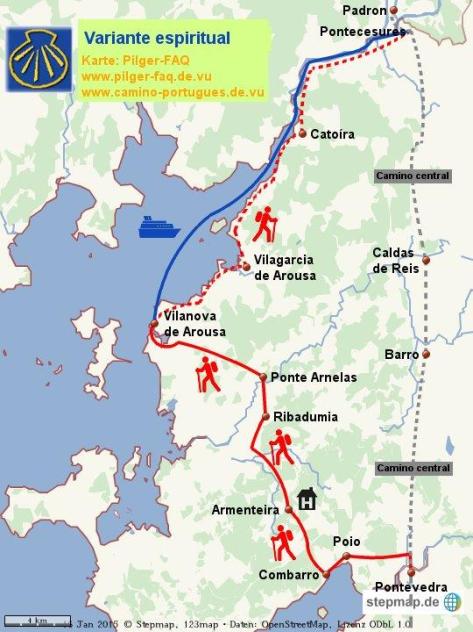
Literature encouraging pilgrims to follow the route describes it thusly:
Follow the same route as the remains of St. James on his journey to Compostela and cross a place of great natural beauty. Discover water-mills, fountains, chapels and monasteries. Walk through forests, vineyards and beaches. Travel the only maritime Via Crucis [sic] in the world, where you can admire the 17 centennial cruceiros (calvary) identifying this part of the Camino de Santiago as the “Translatio.” THE ORIGIN OF ALL ROADS. [“Translatio” means “the transfer.]
After his execution in Rome, St. James’ followers secretly transported his remains to Spain by sea. In 44 AD the ship carrying his body sailed to the Bay of Arousa where his body was brought ashore and then taken by a small boat up the river and again brought ashore, near Padron, and eventually interred at Santiago.
The description of the Variante Espiritual is accurate. It is a less traveled route which gives the peregrino a measure of solitude not generally available on the “official” routes. The number of pilgrims on The Way varies inversely with the distance to Santiago! And, there were a substantial number of pilgrims on the road early that morning.
I fell in with two young women from Germany and a woman who was my contemporary from Switzerland. We chatted in German and in English (their English better than my German). When most pilgrims continued on the traditional Way, the four of us stopped where the Variante breaks off from the traditional Way and we took each other’s pictures. (Last photo in FCB #34.) Then I learned that they also were planning to take the Variante. We walked in tandem for the rest of the day.
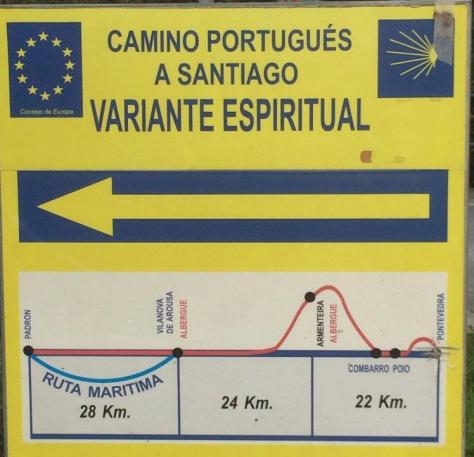
The Variante has a distinct waymark – a concha (scallop shell) superimposed on a red cross of St. James.

After about two hours on the Variante, we came upon frisky lambs frolicking in a pasture by which we passed.
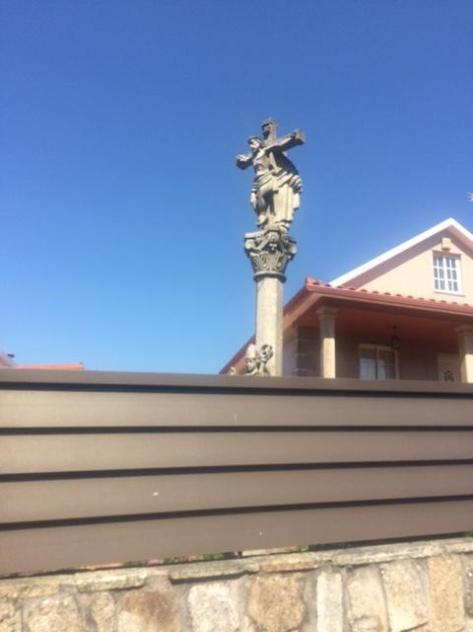
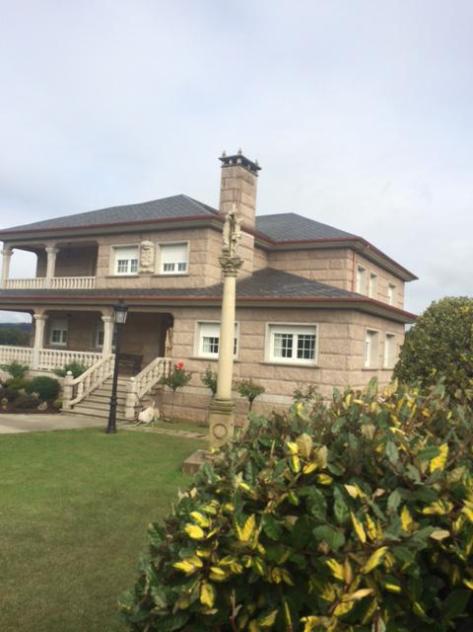
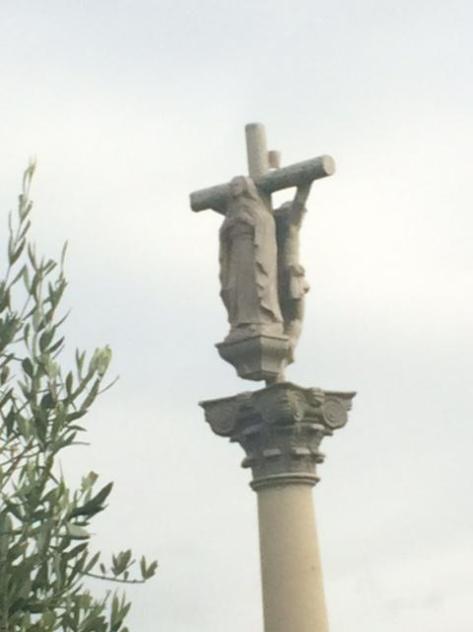
The faith is strong in Galicia. Cruceiros are common and often hundreds of years old. This one appeared to be quite new and the detail was impressive. It was placed in the garden of the home in the background.
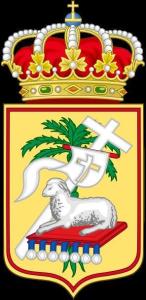
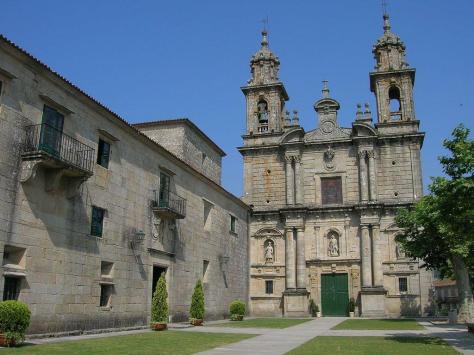
The Variante passes through Poio which is home to a substantial and active Monastery of San Xoan de Poio dating from the 7th Century.
Interesting and recent inlays decorate a court yard. The staff, the gourd, and the cross of St. James – all symbols of the Camino.

We continued on along the coast. The peregrinas continued on, but I stopped at Combarro for a nice lunch and a restful afternoon. The hotelkeeper where I stayed was quite proud of his establishment and his town. He took me up to the roof deck and exulted in the vista!
8 May 2018: Combarro to Armenteira
Combarro is built on the side of a steep coastal range. The Variante breaks away from the main thoroughfare through town and goes . . . up!
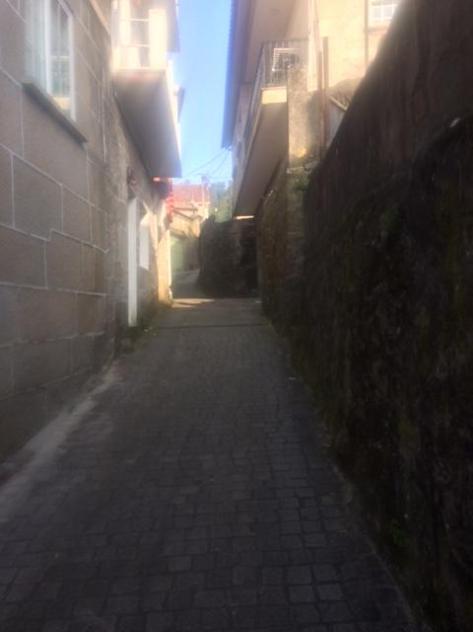
Swiftly, the peregrino finds himself in sparsely populated, then very sparsely populated country. It’s a long, steep climb, but the views are great.
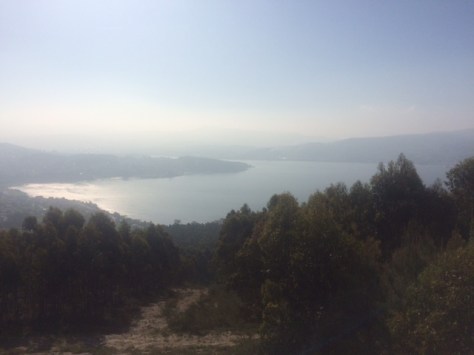
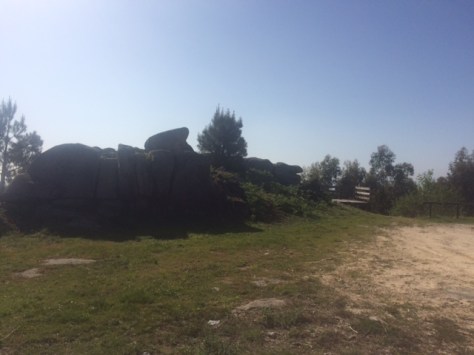
The Variante turns inland but continues to climb, eventually emerging from forested trails and logging roads to reach Armenteira, a pleasant community and location of the Monasterio de Santa Maria de Armenteira. Its nuns are of the Cistercian Order.
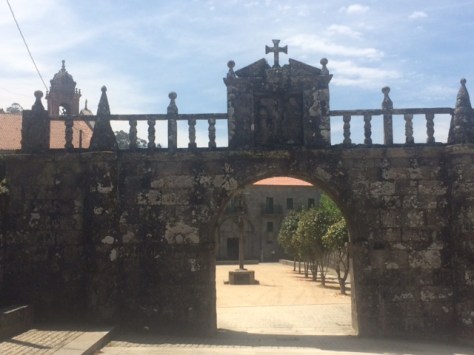
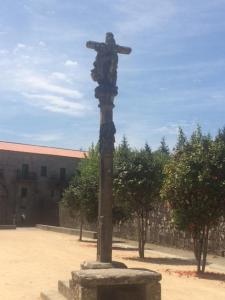
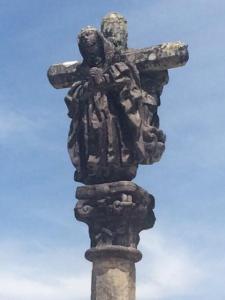
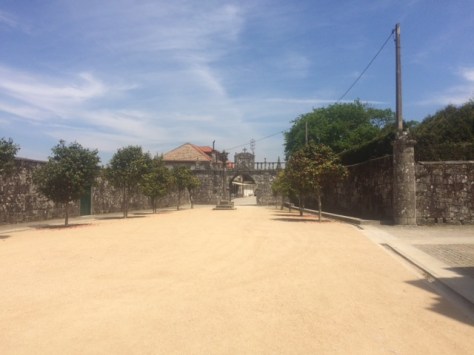
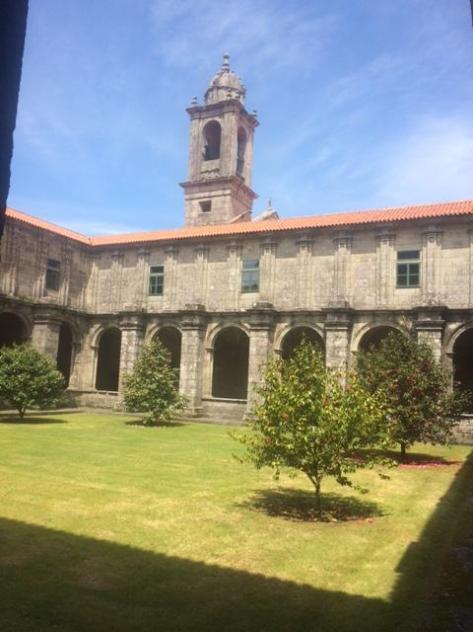

I stayed at an Albergue in Armenteira. It is newly constructed and municipally operated.
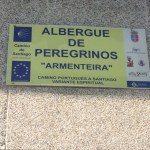
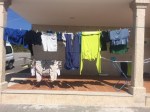
Laundry facilities were present. That’s my laundry hanging from a line – lower left.
9 May 2018: Armenteira to Vilanova de Arousa
Only a very light breakfast was available at the Albergue, so I broke out one of my cans of sardines – my failsafe comestible for situations such as this. The Variante continues through the town and then enters the Ruta de la pedra y del agua – the route of stone and water.
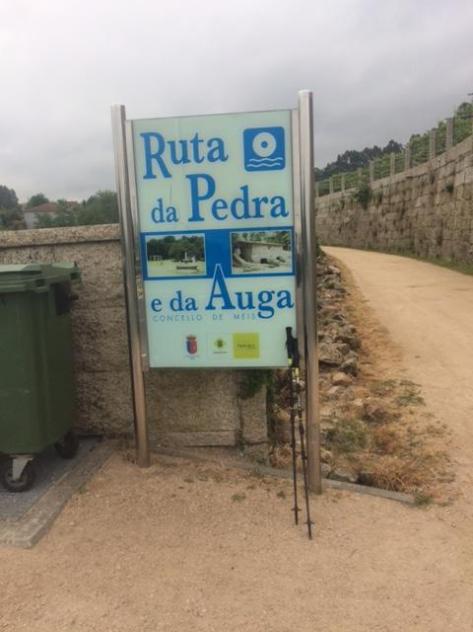
(The spelling on the sign is in the Galician language. Some would argue that Galician is a dialect of Spanish. But the Galicians hold that it is their own language.)
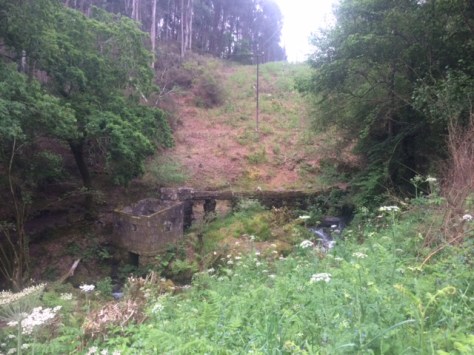
It was a fun walk – mostly downhill – with good signage and pleasant surroundings. There were a substantial number of abandoned stone buildings, and plenty of water along the way.
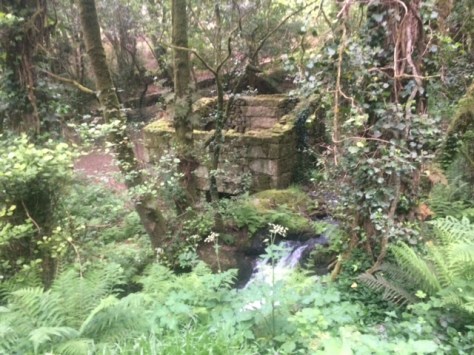
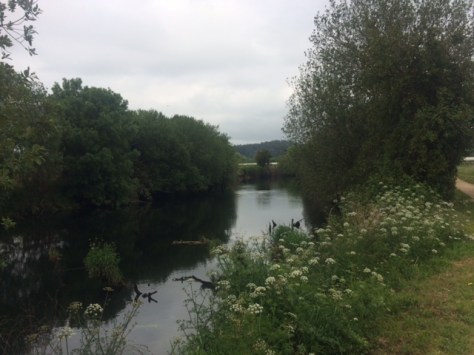
After emerging from the Route of Stone and Water, the Variante continues along side the Rio Umia . . .
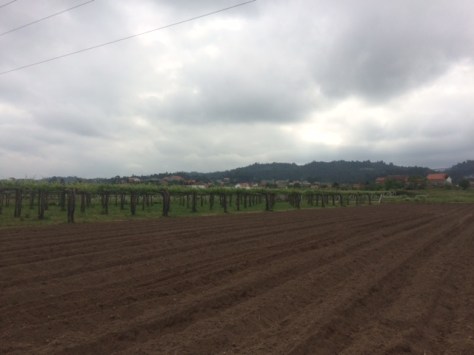
. . . continuing into vineyards. The supports for the vines are built to support substantial crops!

A few minutes later, public art as a tribute to common folk.
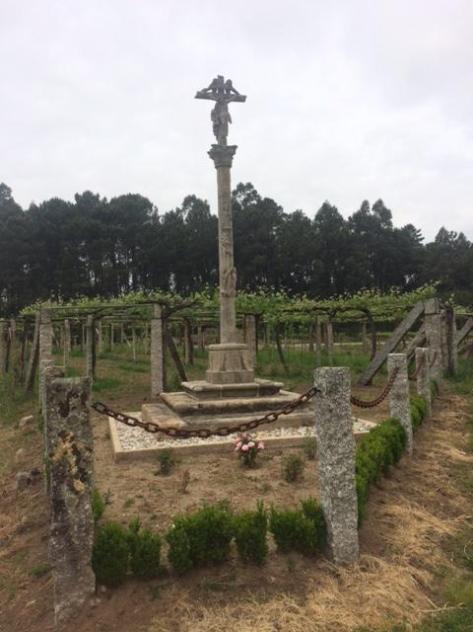
 A cruceiro in a vineyard.
I arrived in Vilanova de Arousa, situated on the edge of the Bay of Arousa, visited the municipal albergue where I bought my ticket for the swift boat transit the next day, and settled into my lodging. I explored the town, had supper, and went to bed . . . anticipating the the next day’s adventure.
10 May 2018: Vilanova de Arousa via the Ruta Maritima – to Padron
I was up timely, enjoyed a decent breakfast, and headed for the boat landing. Several of us looked around for the boat that was to take us up the river, but to no avail. Over the next half hour, about two dozen peregrinos gathered there, all a bit chilly and wondering if we were in the right place. Eventually the boat and the boatman arrived.
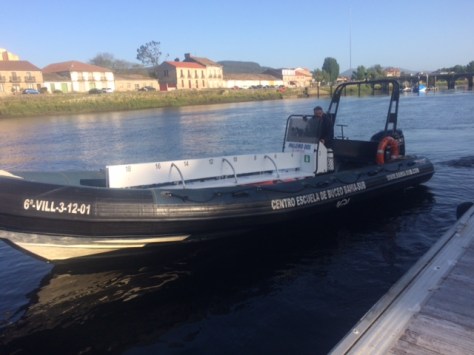
We all boarded, along with our mochilas and walking sticks which we held between our knees. It reminded me of riding in a cattle truck during Army Basic Training with my duffle bag between my knees. The benches were not deep, but they were adequate.
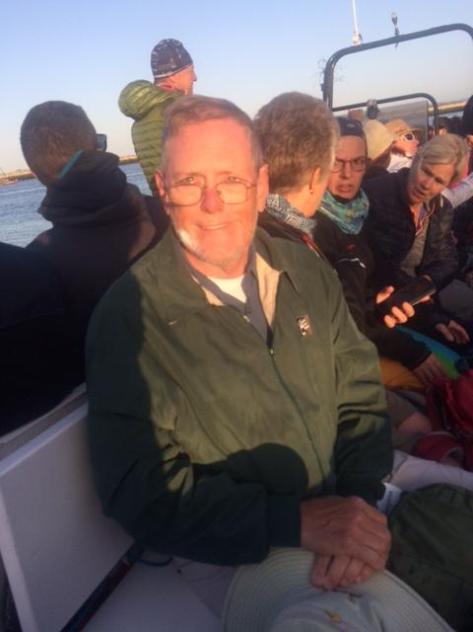
We cast off and proceeded. The sun was not high yet; the scenery was lovely.
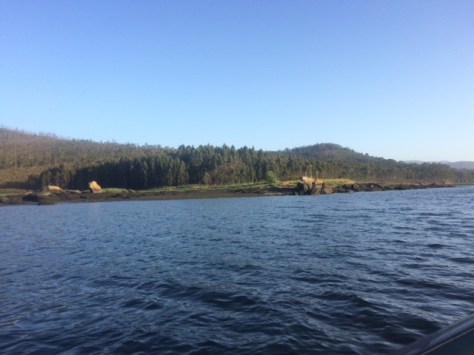
The boat was swift and provided an exciting ride! I had almost a front row seat.
In time, we came upon a trio of cruceiros – depicting on the mount at Calvary, Jesus in the center and the criminals lower and to his left and right.
Not long after, we arrived at our destination, Pontecesures, a short two kilometer walk to Padron. The boat and the boatman returned to Vilanova. I and the other peregrinos now were back on the Camino Portugues.
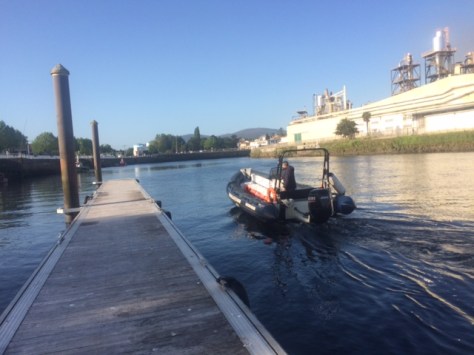
I got a Café con Leche to warm up, and then headed the short distance to Padron. checked in to the Hotel Chef Rivera – the very same lodging I had when I passed this way in 2014. (Shout out to my friends from Alberta who walked in tandem with me then, and who also stayed at the Chef Rivera.)
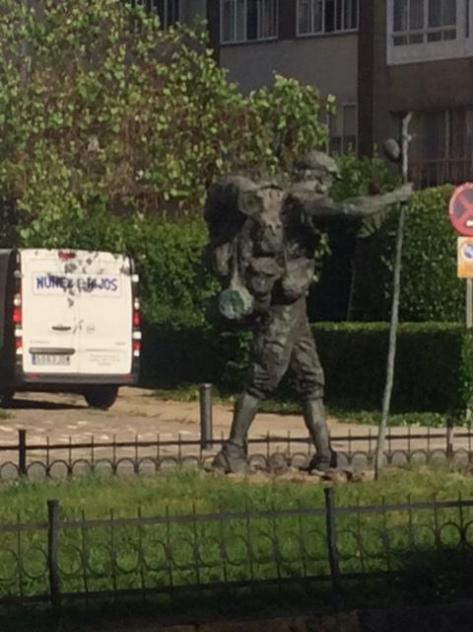
I revisited Padron. The bronze peregrino is still walking toward Santiago.
It was a nice day, and families were enjoying the
11 May 2018: Padron to Santiago
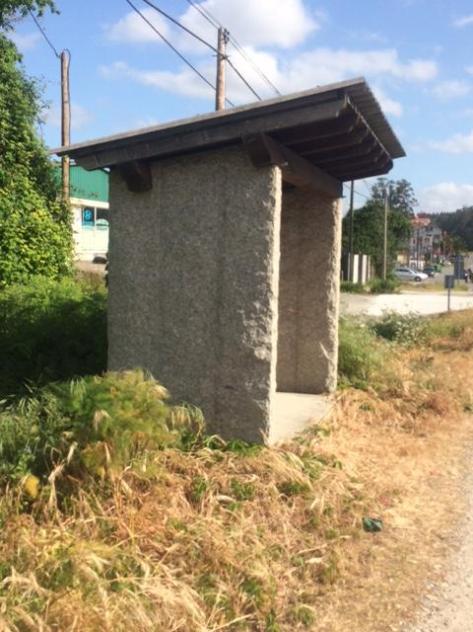
On the way out of Padron, I noticed a recently constructed passenger shelter. Made of granite!
The Way avoids some of the heavily traveled highway by traversing country lanes and villages.

At Faramello, The Way passes a small church and shrine, and the Cruceiro do Francos, one of the oldest wayside crosses in Galicia.

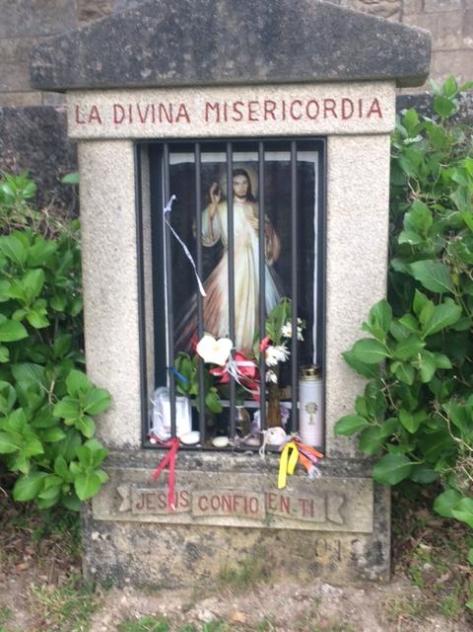

Shortly thereafter, I came upon what I will simply describe as a lazy man’s way of herding sheep.
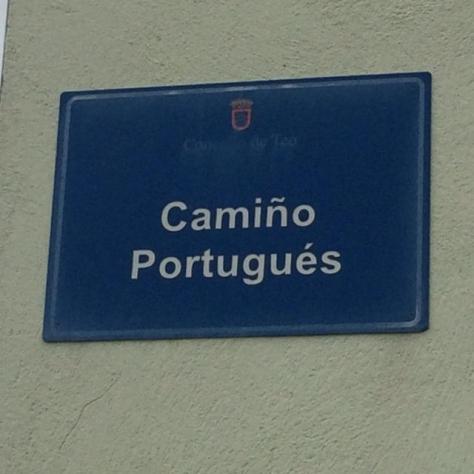
A handsome plackard in the town of Teo.
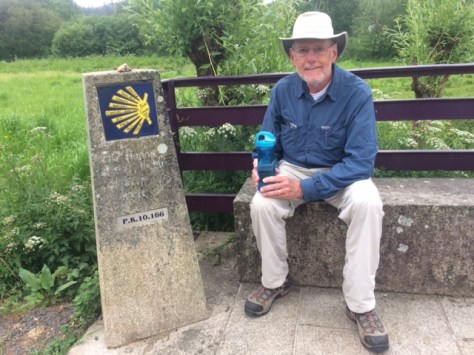
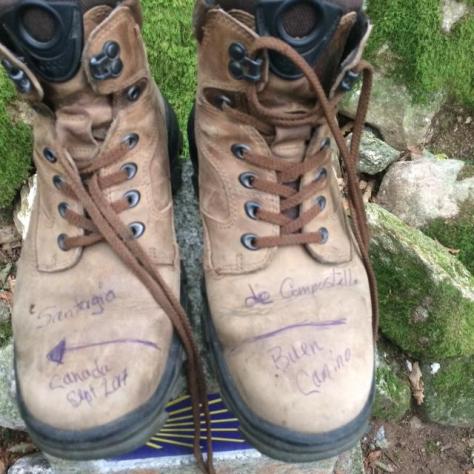
And here, the Fog City Boy is slightly over 10 kilometers from Santiago – sitting at the same bridge where a similar photo was taken in 2014. Different boots (the other pair wore out after 1,000 miles), a different water bottle, and Tilley hat a bit floppier, but the same Fog City Boy – boots, water bottle, hat, and peregrino – none the worse for wear!
I continued on, took a break for lunch, and reached Santiago in the late afternoon.
An obliging peregrina took my picture and interviewed me about my perigrenacion.

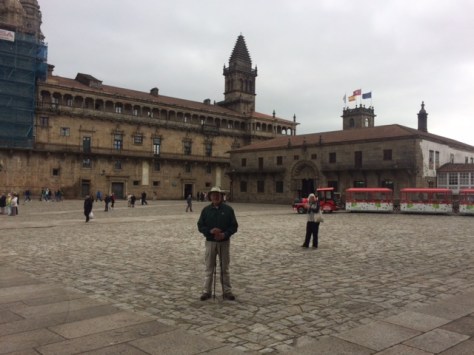
12 May 2018: At Santiago
I was up early and arrived at the Pilgrim Welcome Office about 7 am. The line had already formed. At precisely 8 am the gate was opened and eager peregrinos filed inside. A volunteer in the office reviewed by pilgrim passport, placed a final stamp in the next open space, and prepared a Compostela bearing the date of issuance, 12 May 2018, the point at which I had begun the pilgrimage, and my name – suitably Latinized. Although I have earned three other Compostelas, each one has special meaning for me. I am pleased, and honored, to have them.
I left the Pilgrim Office to return to my hotel for a good breakfast and then explored the Convento de San Francisco which was a block away. A handsome structure, the exterior recently renovated, with extraordinary religious art within.
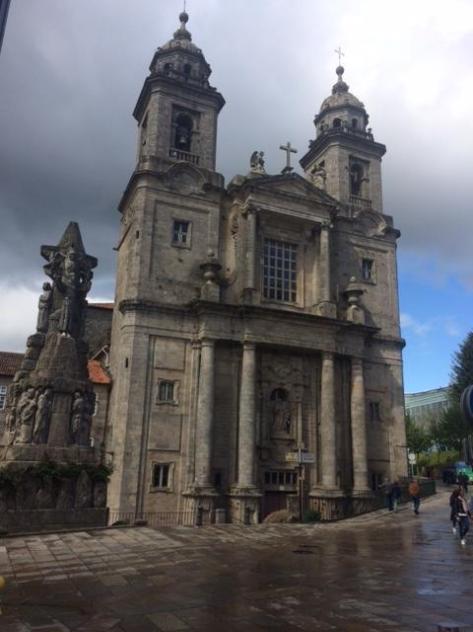
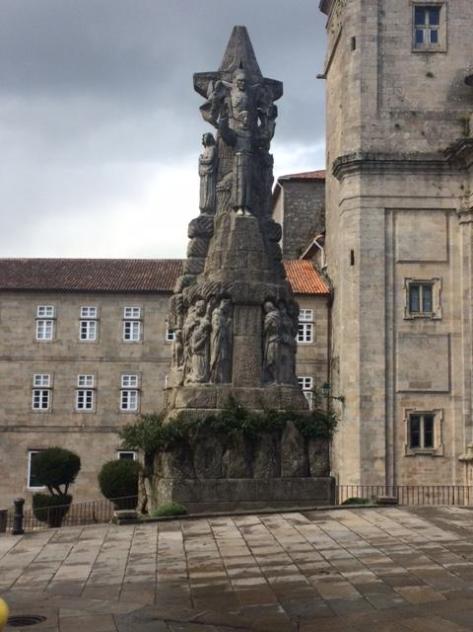

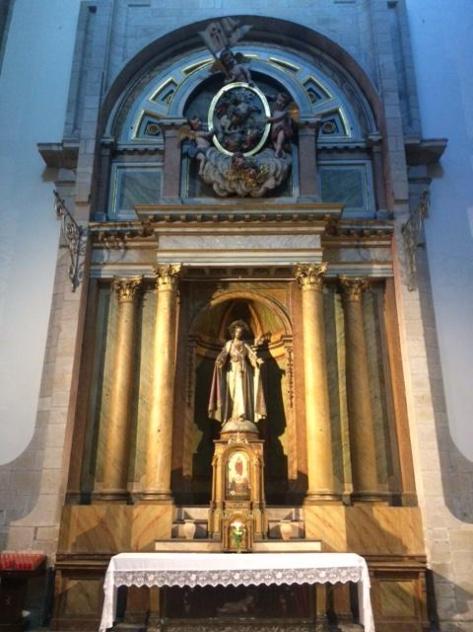
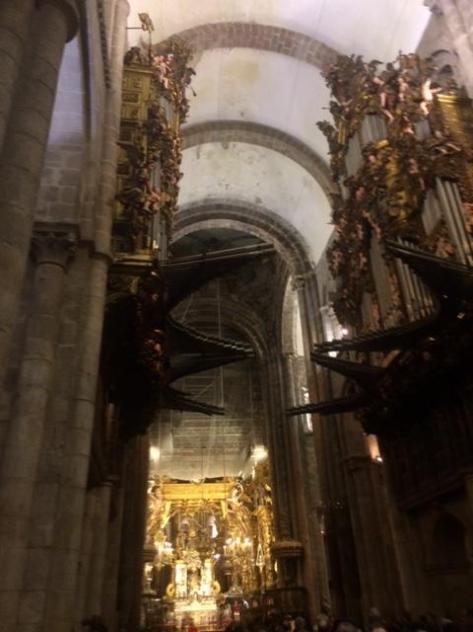
I then visited the Cathedral, and as always, marveled at the grandeur of the structure, and the extraordinary art in the chapels and the main altar. I lit a candle in memory of a friend who had passed away shortly before I left on my pilgrimage.
I visited other venerated buildings and enjoyed just wandering the streets of Santiago. And from a travel agency near the Cathedral, I got a map and a new pilgrim passport for use starting tomorrow!
There is always a sense of exhuberance in Santiago because when peregrinos arrive, they know they have achieved a major accomplishment – whether religious, spiritual, or simply athletic. They, and those who have come to welcome them, are in a celebratory mood.
There was dancing in the Praza de Cervantes.
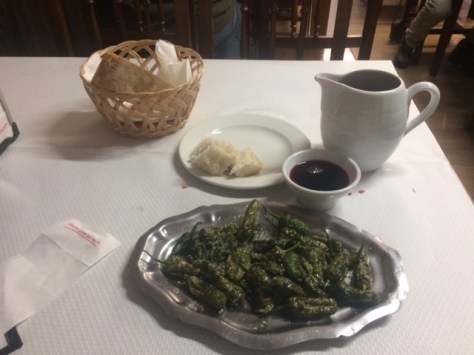
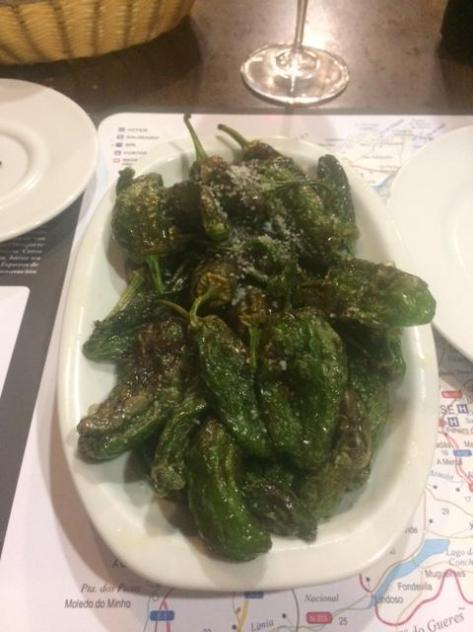
I had a good dinner, including a long-standing local favorite – pemientos padron and vino tinto de la casa.
Tomorrow would be another day, and another journey. Tomorrow I would strike out on the 90 kilometer Camino Finesterre – the journey to the lighthouse that marks the place the Romans thought of as Lands End – the end of the earth.
Buen Camino!
More to come!
Knute Michael
 If you would like to receive email updates as entries are posted, scroll back up to the first page and click on the “Follow” button on the lower right corner. This feature may not be available on cell phones.
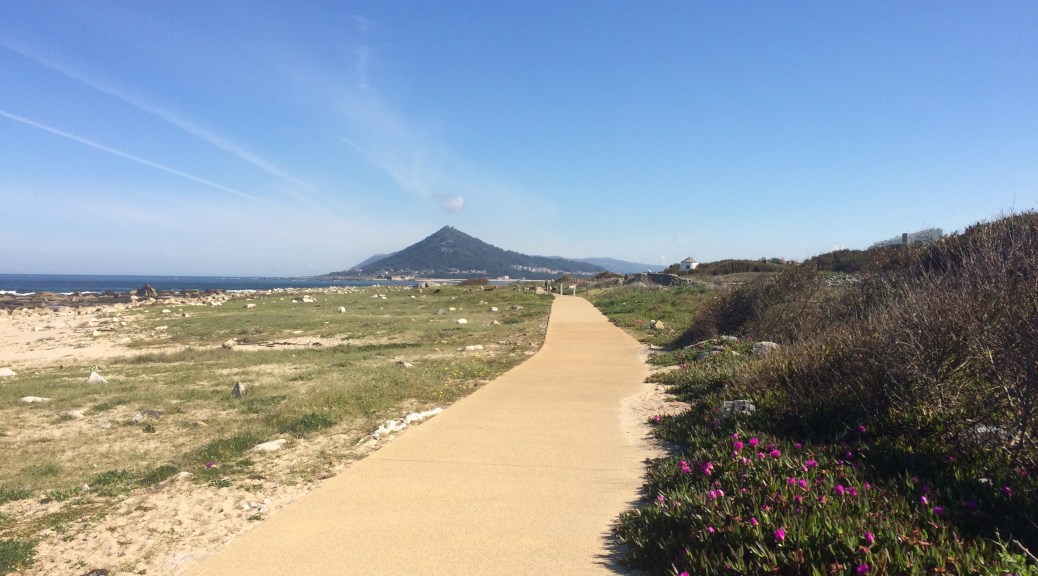


 After about an hour after leaving Ancora, I came upon a herd of goats enjoying a seaside brunch. In the distance you can see Monte Tecla which dominates a peninsula on the Spanish side of the Rio Minho (Rio Min͂o).
 I arrived in Caminha, briefly explored the central city, and at about noon proceeded to the ferry. The ferry was a modern catamaran design and was moored conveniently to the town. A gentleman who appeared to be part of the ferry operation told me that the ferry wouldn’t set out again until 2:00 – however, there was a small boat that could take me now. Was I interested? I looked over the small boat. It appeared seaworthy. Already aboard were two peregrinos from Japan who were doing their perigrenacion on bicycles, also on board. We chatted briefly and the boatman cast off.
 The Japanese fellows got on their bikes and went on – up and over Monte Tecla – the official Camino de la Costa. I continued around the mountain on the Senda Literal which skirted lovely beaches. I paused and looked back at Portugal.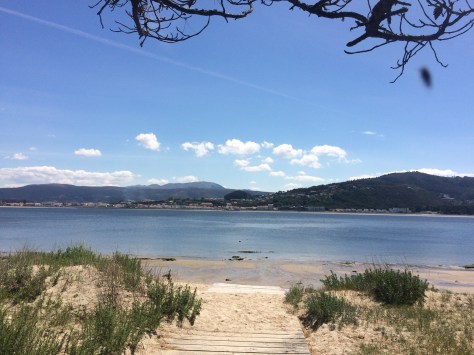


 It was strategically placed with a commanding view of the sea to the west . . .
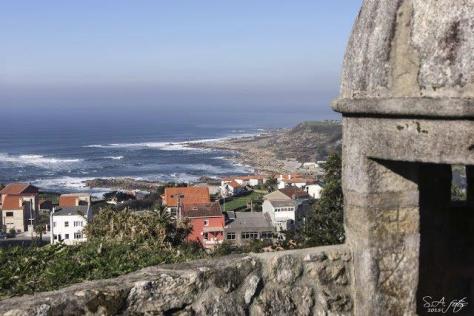 The Spanish verb “aguardar” can mean variously, ”to keep,” “to watch,” to guard.” An appropriate name for the town that grew up beneath the castle!
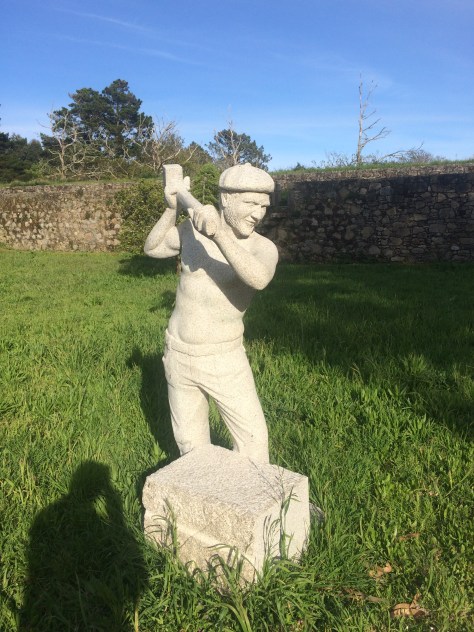
 The sculptures celebrate common folk rather than royalty.
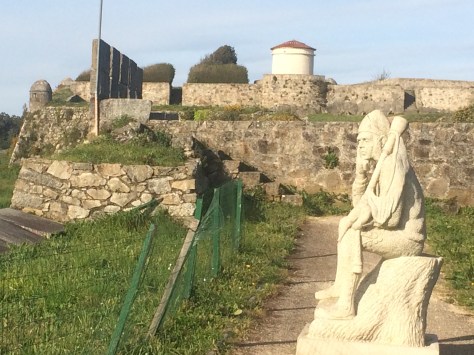 A mason . . .
 A young woman in the wind, facing the sea, waiving to her lover . . .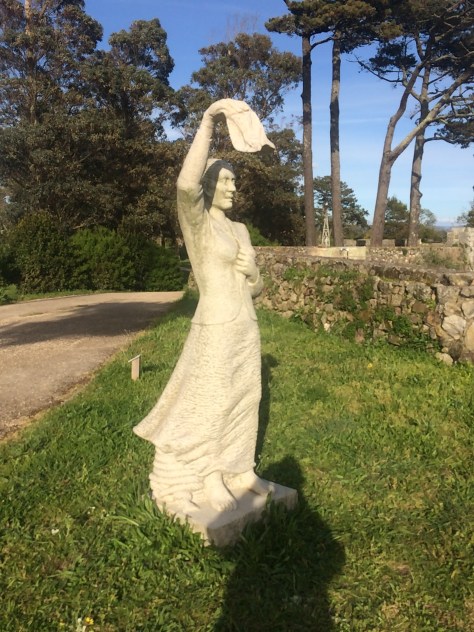


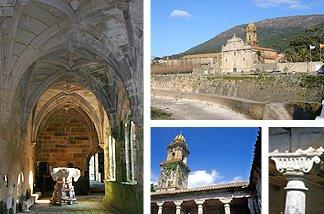 The Monastery is closed to the public at present. A private development concern has undertaken to restore the monastery and adjacent buildings with the aim of establishing it as a 4-star hotel with meeting rooms and other facilities. They hope to develop year-round tourism which the locals accept with mixed emotions.

 A little further along and on the other side of the road, no swimming pool, but a great view.
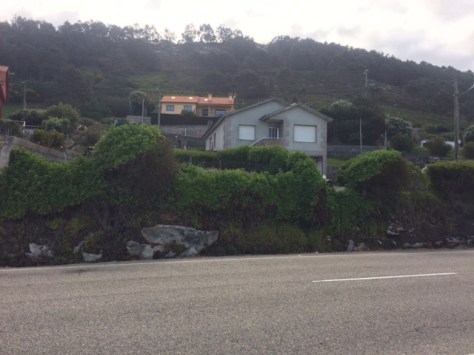 As elsewhere in Spain, the local authorities have taken steps to facilitate peregrinos and keep them safe from vehicular traffic. Note the granite peak in the distance.
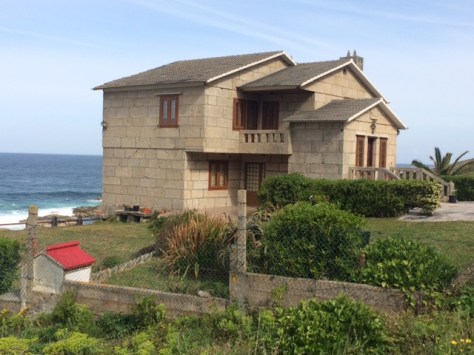
 Another coastal home. Note that it is constructed of granite blocks, an oft-used building material in this corner of Spain.
 And, atop the granite peak, the Faro de Cabo Silleiro, built in 1924 and projecting a light 44 kilometers (24 nautical miles).

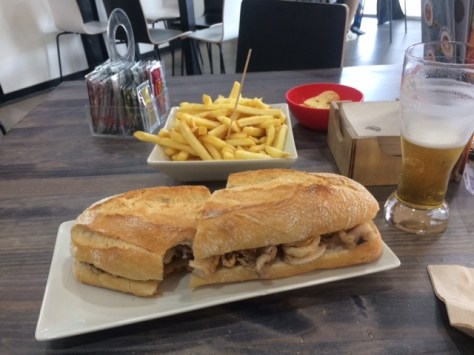 What would the large version have looked like!?! I enjoyed half the sandwich and saved the other for lunch the next day.
 A handsome fonte dating from 1865 is situated near the town center.
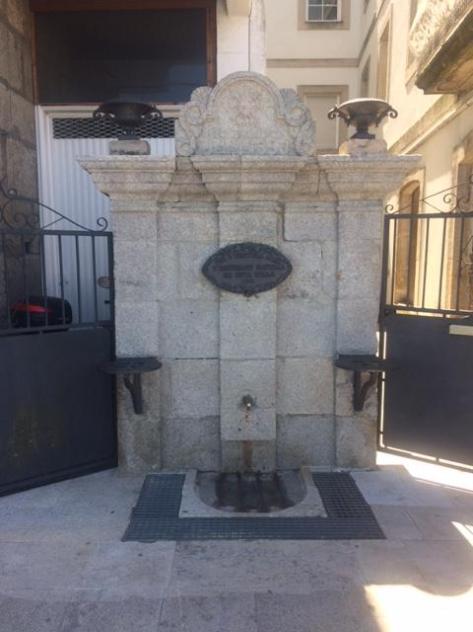 The placard explains that the fountain was donated to the city of Baiona by Ventura Misa y Bertemati, a local entrepreneur.
 I wandered the town for a time. The billboard below was not the first one I had encountered offering instruction in the English language.

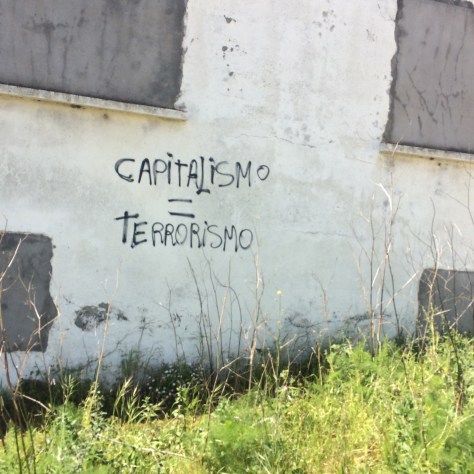
 As previously noted, political messaging in Spain is not uncommon.

 More beautiful scenery, but increasingly developed for visitors’ enjoyment.
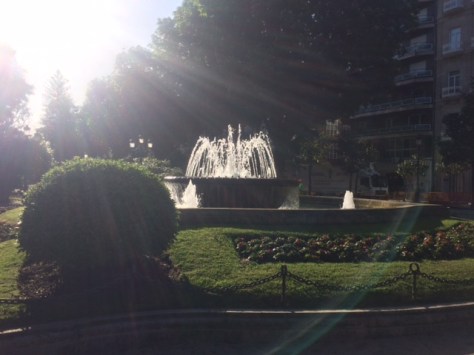 About two hours into the day, the Senda Litoral rejoins the Camino de la Costa. At this point The Way becomes quite hilly which is, on the one hand challenging, but on the other, affords wonderful views.
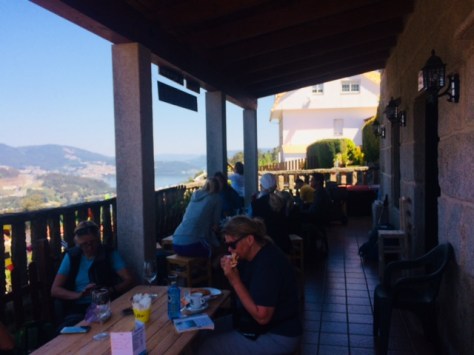 I gave her the address for my blog. I’m hoping she is reading this now!
 The Camino de la Costa continues through a lightly wooded landscape. . .
 . . . before reaching Redondela where it rejoins the Camino Central – the traditional Camino Portugues.
 At Arcada, a Roman bridge still crosses the Rio de Vigo.
 Once across, there are more than one challenging climb!
 We are now well into Galicia. The frequency of Crucieros increases.
 Later in the day, I came upon the Capela da Marta, dating from 1817
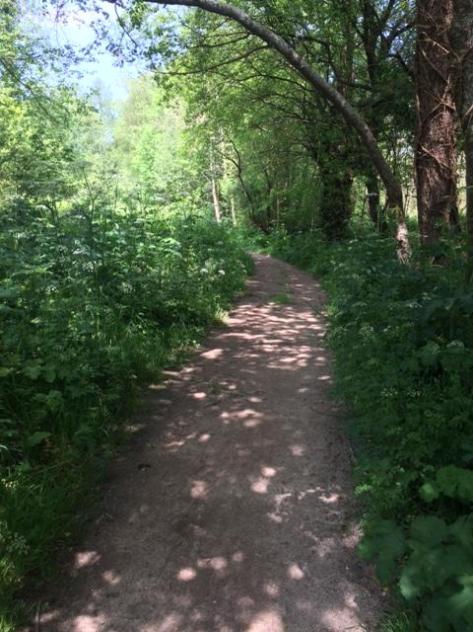
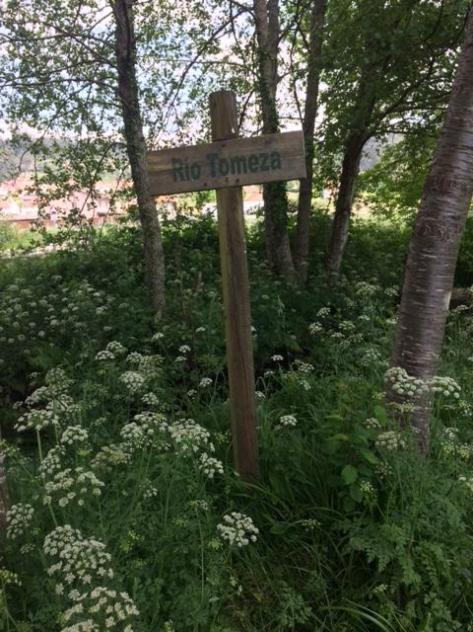
 Shortly after that, I decided to walk a detour from the regular Way – the Senda Fluvial rio dos Grafos Tomeza. This was a lovely, shaded, and engaging walk through the woods along a babbling brook!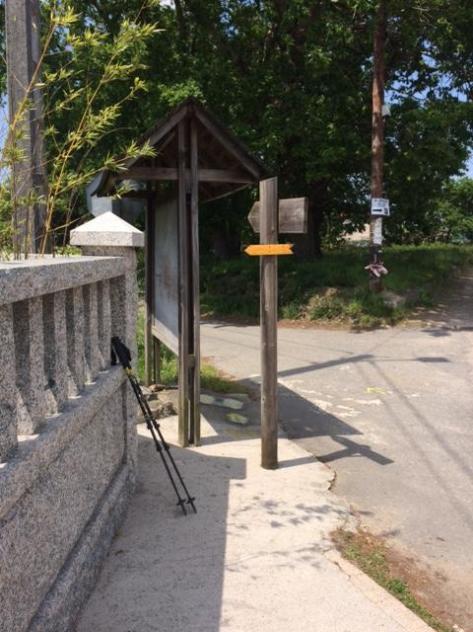



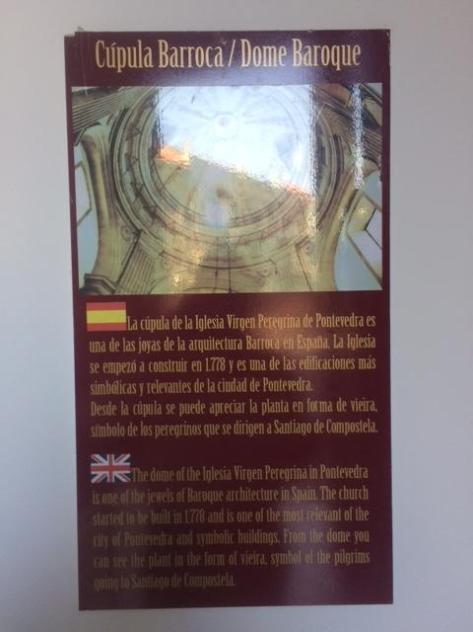
 . . . and continued a little more than three kilometers, passing by a charming painted tile on a wall surrounding a suburban house depicting St. James, a Camino waymark, and the cathedral in Santiago. . .
 . . . they were welcoming and acknowledging the pilgrims passing by . . . and I continued my perigrenacion to Santiago via the Variante Espiritual.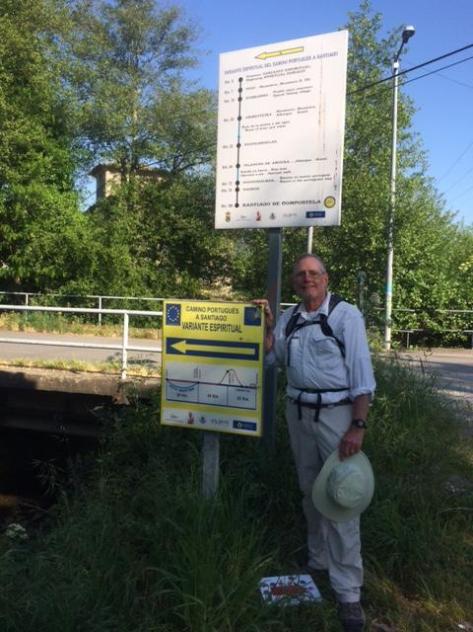
 If you would like to receive email updates as entries are posted, scroll back up to the first page and click on the “Follow” button on the lower right corner. This feature may not be available on cell phones.


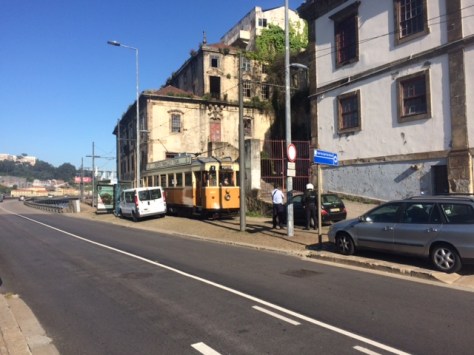
 Soon the river met the sea, and the vista became more dramatic.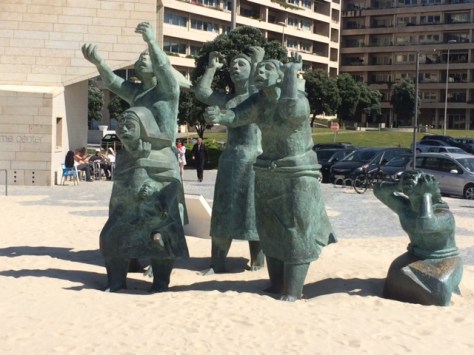

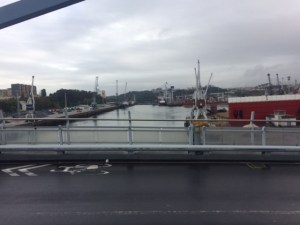
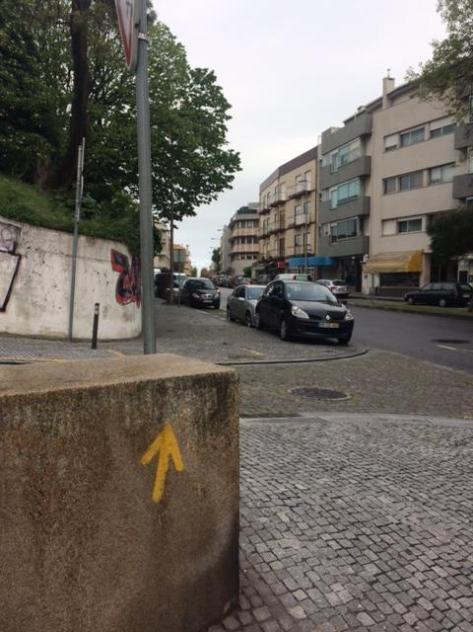
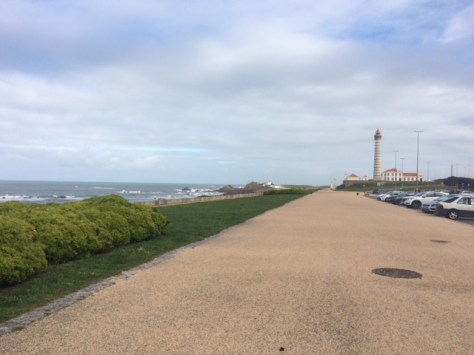 The weather improved during the course of the morning. I passed through a small fishing village, continued on along a network of boardwalks and accompanying views.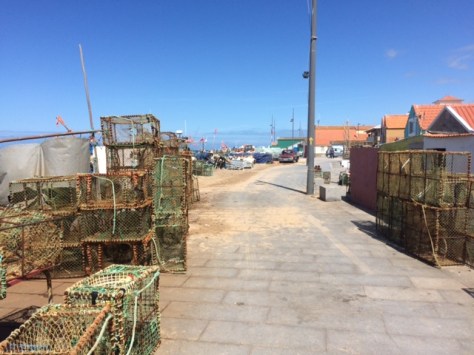
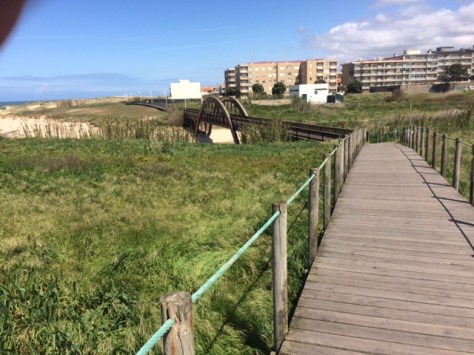 High on a bluff a cross reached out to the faithful.
 Sometime after noon, I came to a small village and discovered a small café where a half-dozen young workingmen were enjoying a hearty lunch. I presented myself and the matron of the café asked, “peixe ou carne?” I responded “peixe“ (pronounced “pesche”). I could infer from her next query that she wanted to know “what kind?” I told her with gestures that she should choose. A few minutes later she returned from an outdoor barbeque manned by her husband with a wonderful a whole fish – expertly fileted, moist and tender. With boiled potatoes, cabbage, bread, sparkling water, it was the best meal I had in all of Portugal! The price? €7.50.


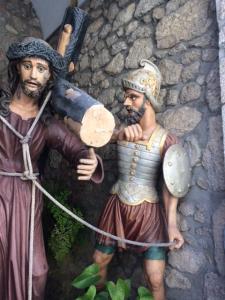
 In the distance you can see an aqueduct built in the early 18th century. It supplied water to the entire city from the nearby hills.
 This time, the day started out on the “official” Caminha da Costa. Leaving Vila do Conde, The Way is well waymarked and passes through developed districts eventually reaching Povoa Varzim which hosts a handsome church.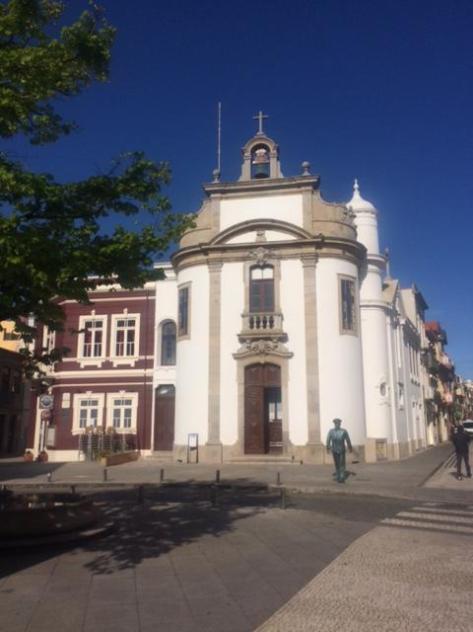
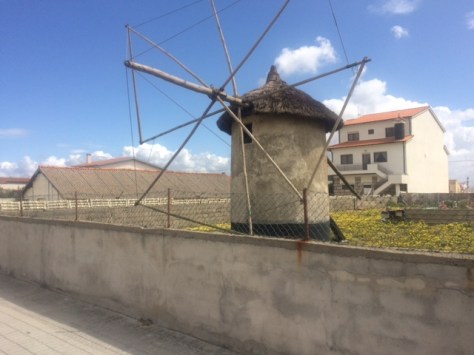


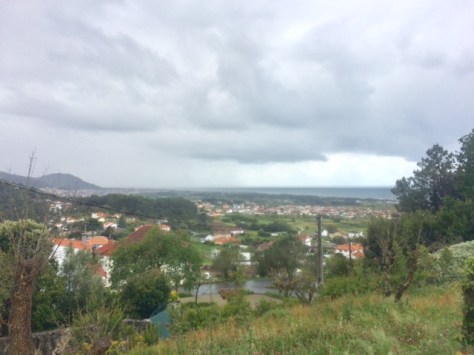
 My Caminha friends from London offered to take my picture after we successfully exited a long wooded stretch with intermittent rain.
 We passed by a lovely shrine en route.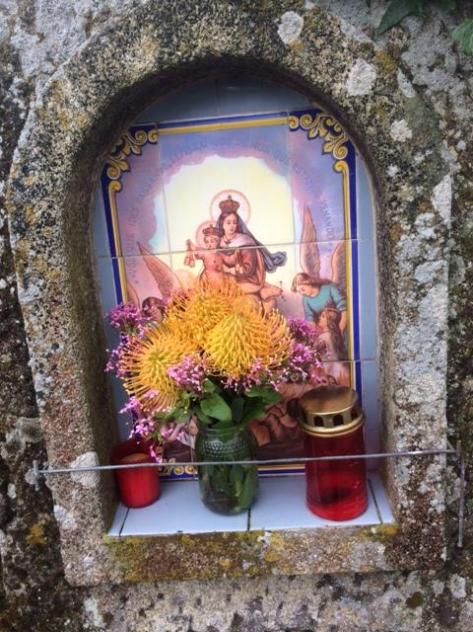

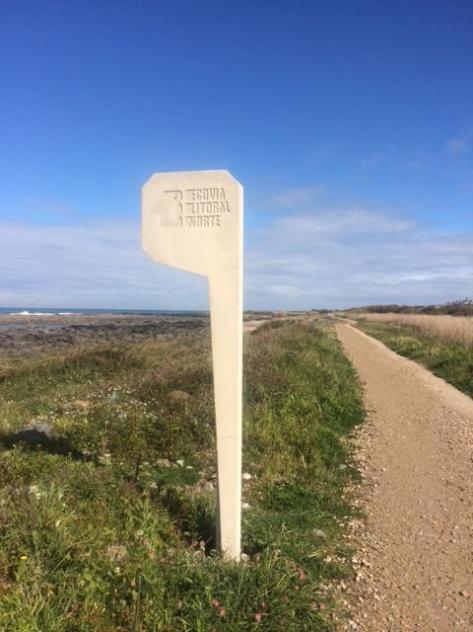
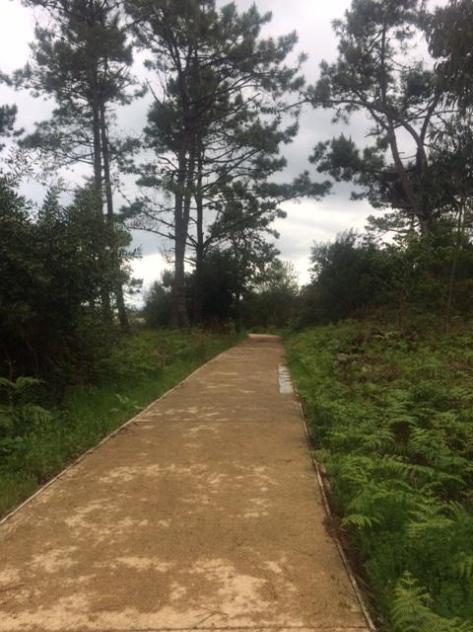 It was a lovely day, and the views were rewarding.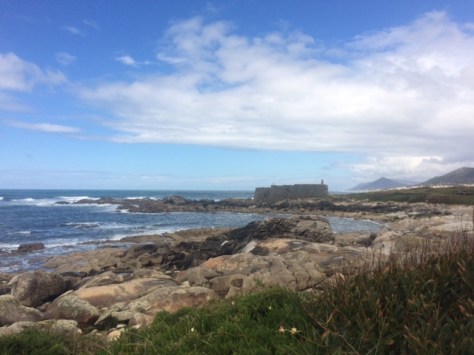
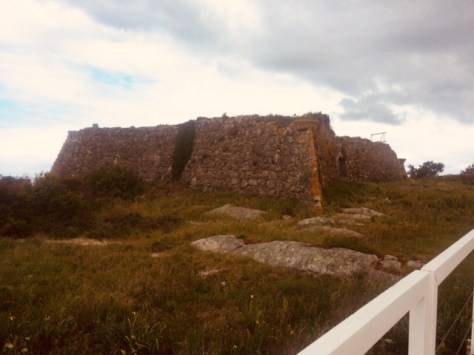

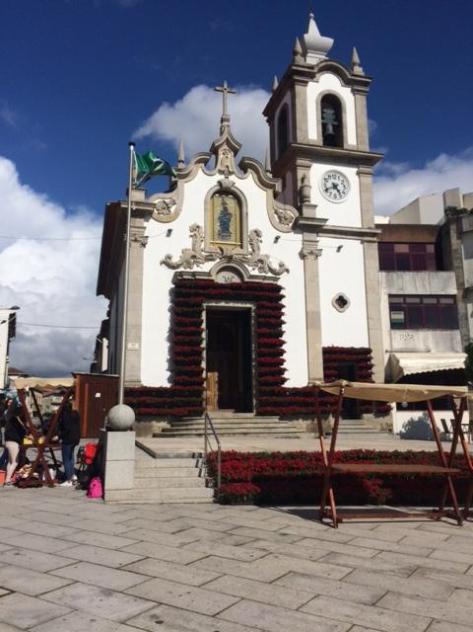
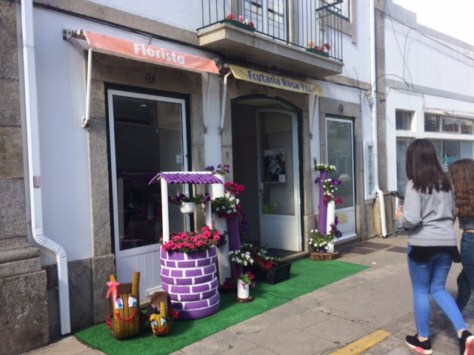
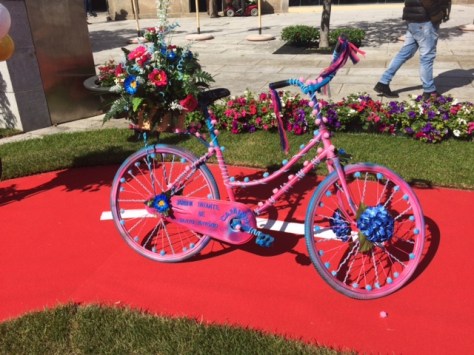
 And many decorated bicycles!


 If you would like to receive email updates as entries are posted, scroll back up to the first page and click on the “Follow” button on the lower right corner. This feature may not be available on cell phones.






 If you would like to receive email updates as entries are posted, scroll back up to the first page and click on the “Follow” button on the lower right corner. This feature may not be available on cell phones.




 I collected the selle, made a donation, and explained my plight.


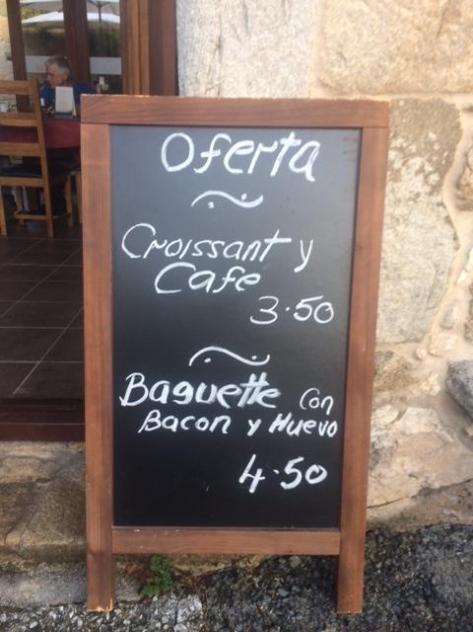
















 Valparaíso.



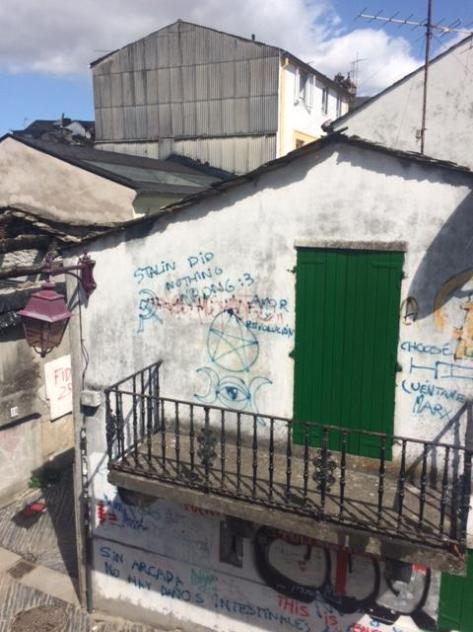 And nearby there was a new one, I believe (from the style), offered by the same anarchist.
 And as I reported last year, there are many grand structures awaiting rehabilitation.
 I will continue the Camino Primitivo tomorrow, making my way over several days to Melide where the Camino Frances and the Camino Primitivo converge.

 I headed for the Porte D’Espagne, the ancient gateway into Spain, purchasing what would be the first of many bocadillos – Spanish for “sandwich” – that keep body and soul together midday on The Way. Bocadillos generally consist of a couple of thin slices of ham slapped inside a crusty roll without benefit of mustard, mayo, lettuce or tomato.
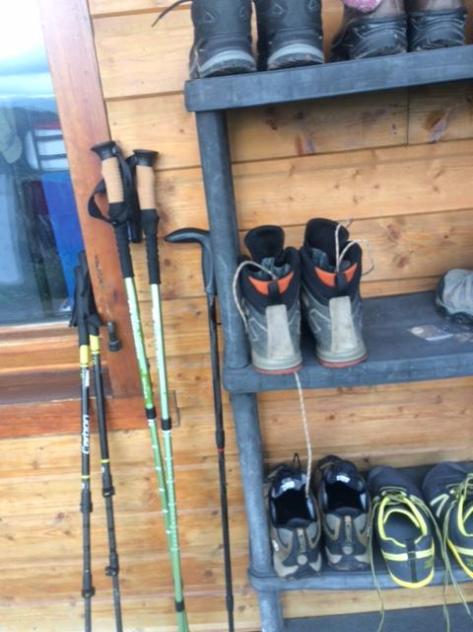 The shower felt very good, indeed, though the automatic clock shut off the water at exactly five minutes. Thankfully, I had been forewarned!
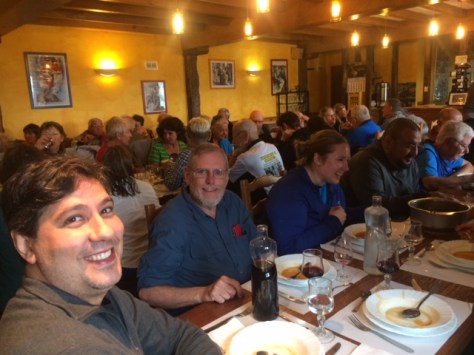


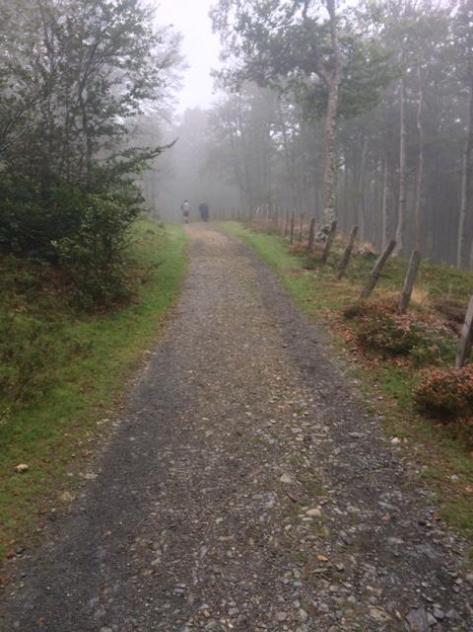

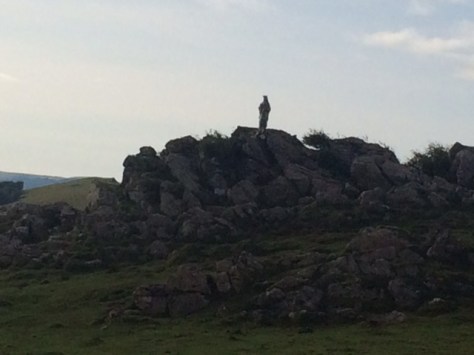 Further along there was a simple shrine to a peregrino who died on The Way.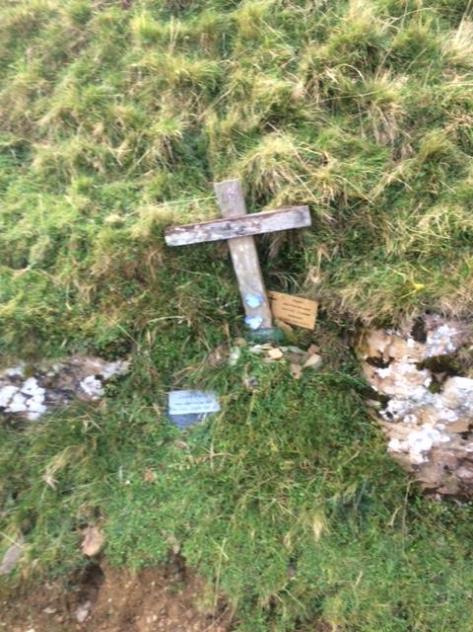


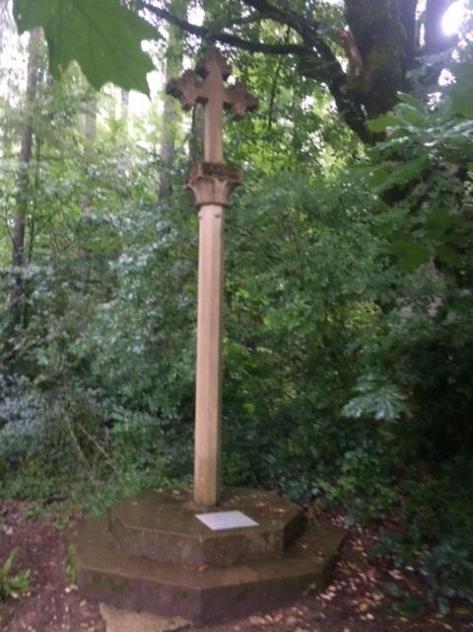
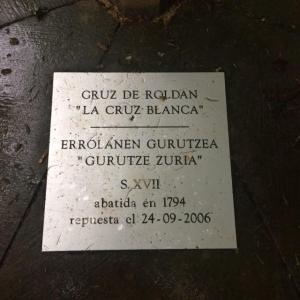 A nearby post had been annotated by a supporter of Basque independence.
 Murals greet the passing peregrinos welcoming them to the village of Burguete Auritz.


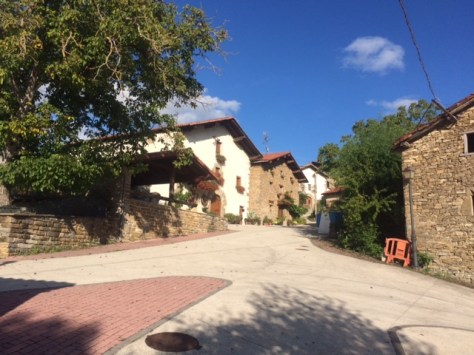
 A little farther along, a 12th Century Abbey stands in remarkably good repair.
 The Basques do not shrink from declaring their national identity.
 Along the way, peregrinos had arranged the rocks to make a waymark for those who followed.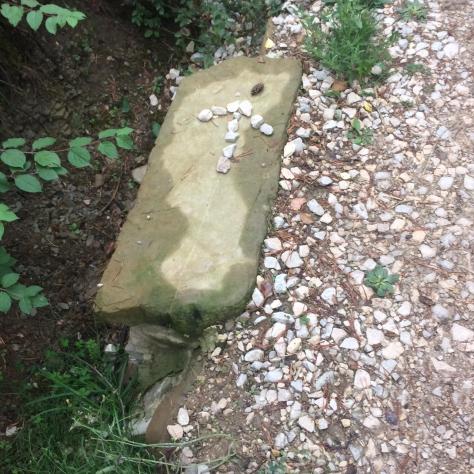

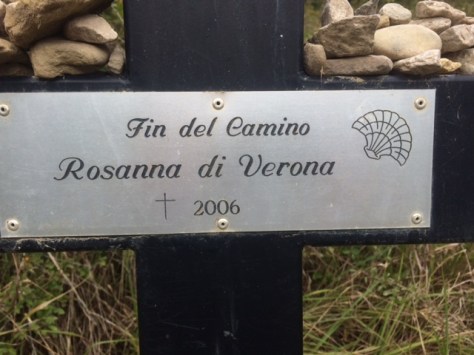
 The entry to Pamplona is scenic, but along a noisy motorway.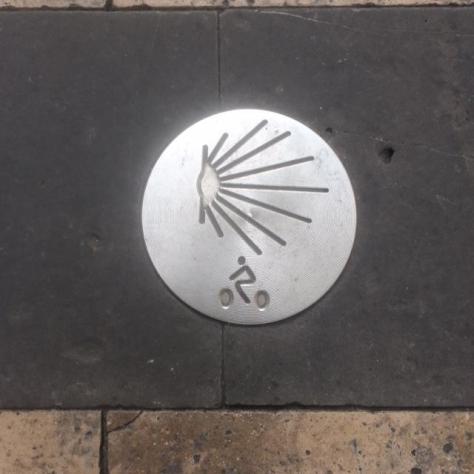
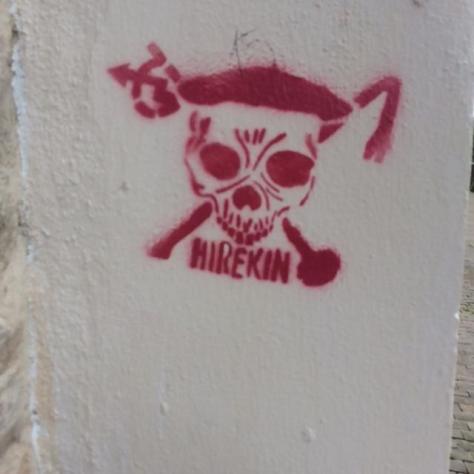

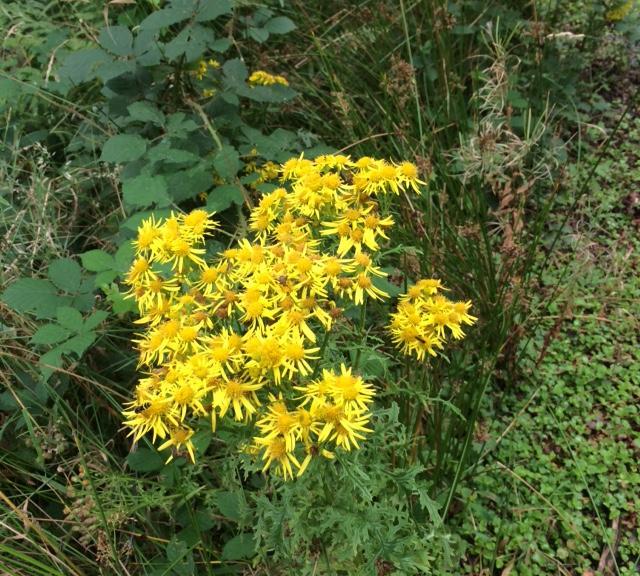
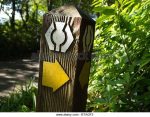
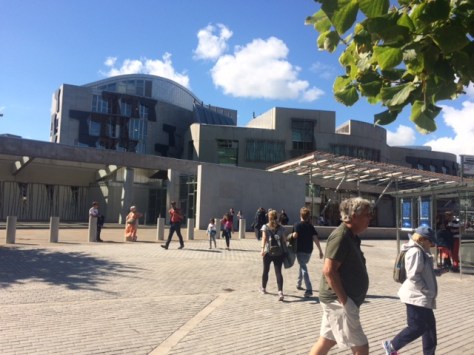
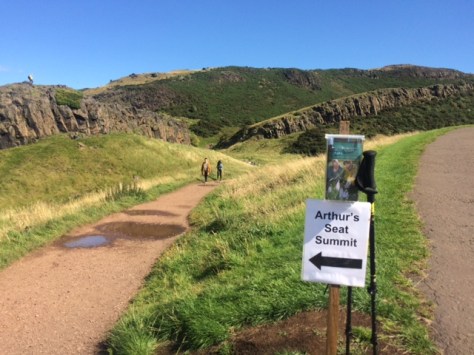
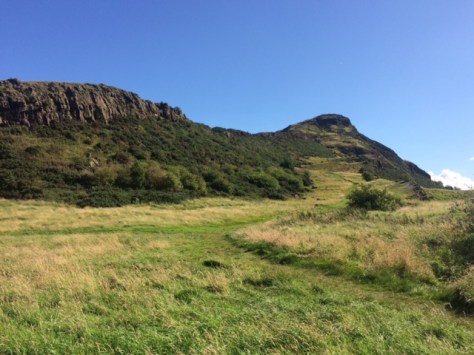
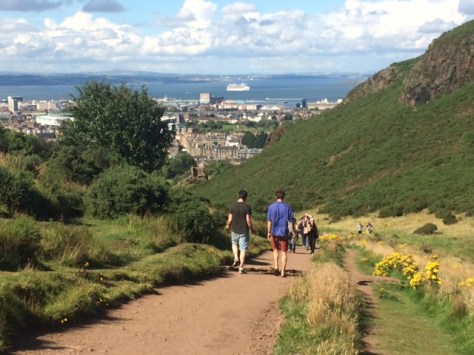
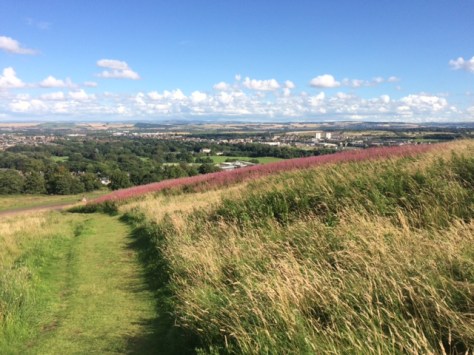

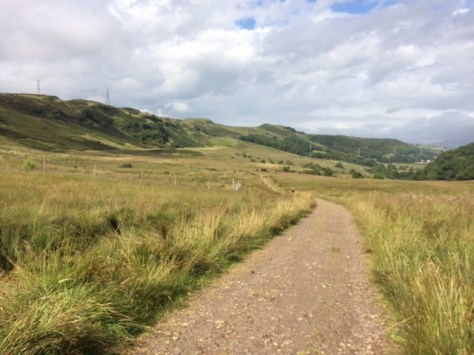
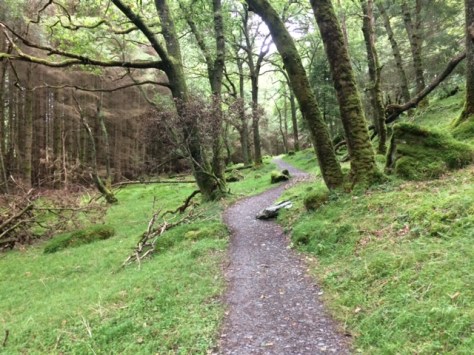
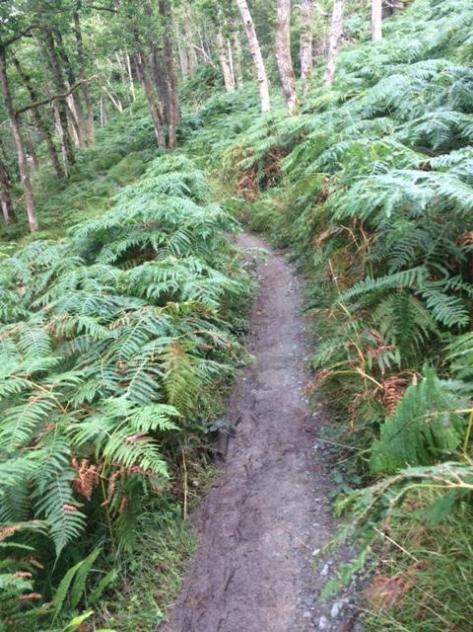

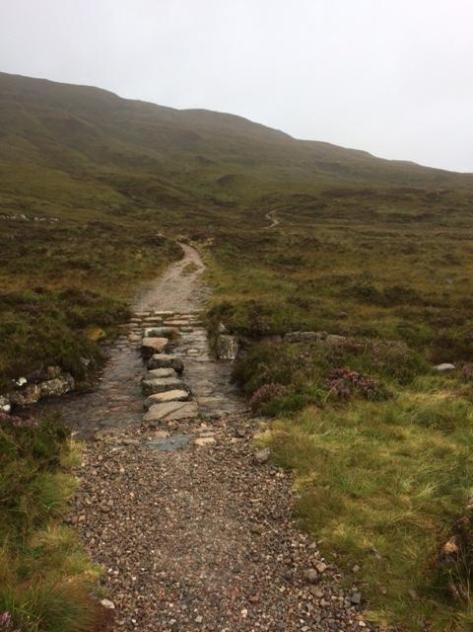
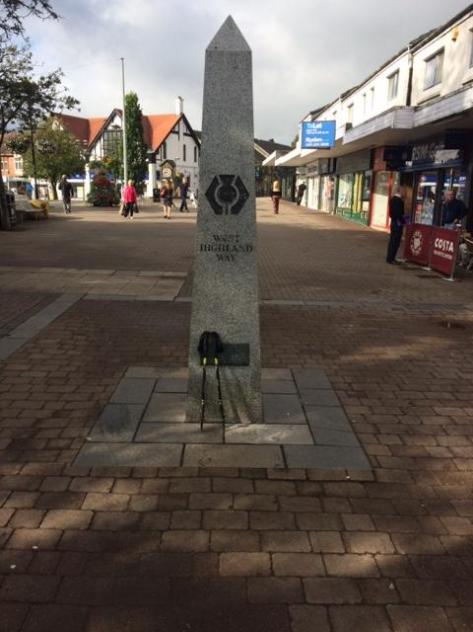

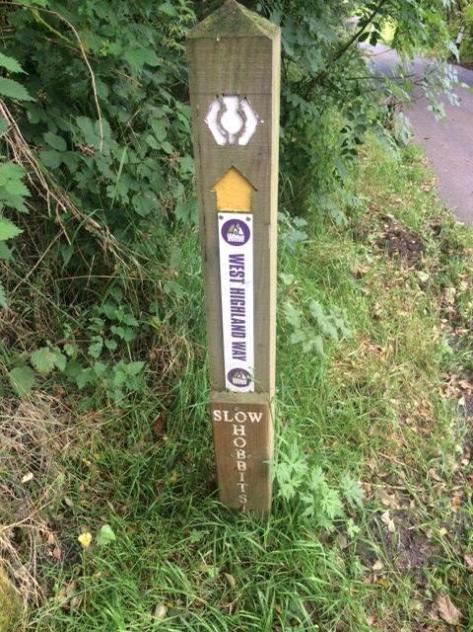
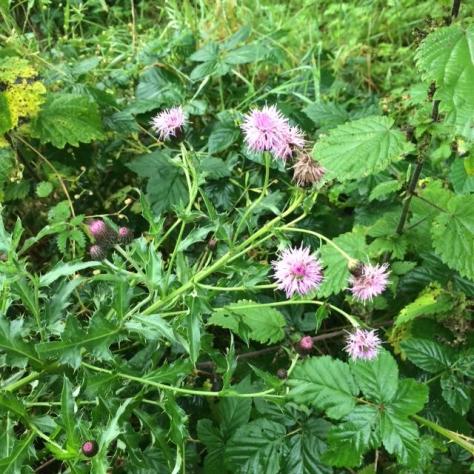

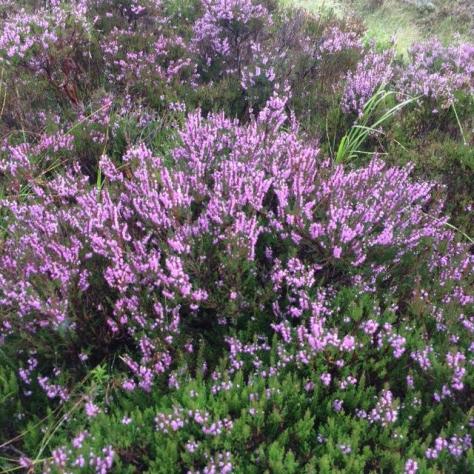
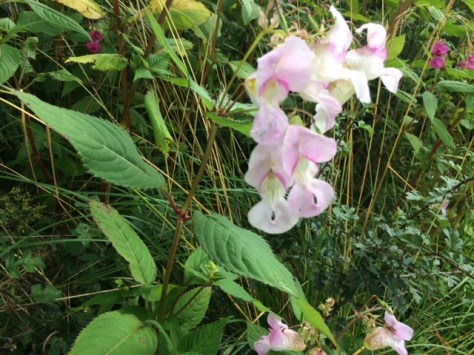
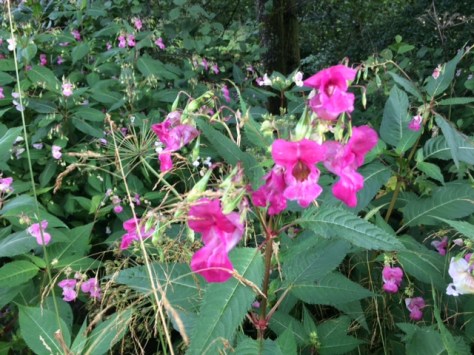
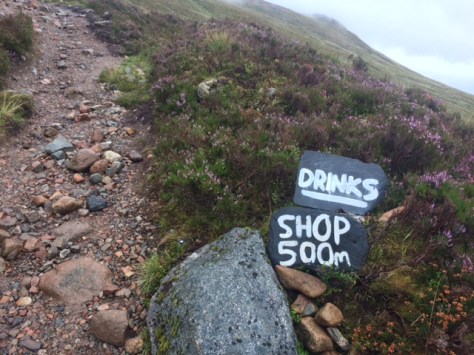
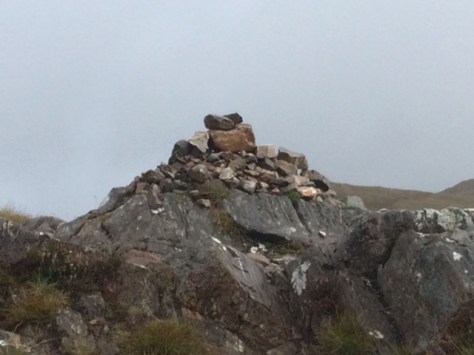
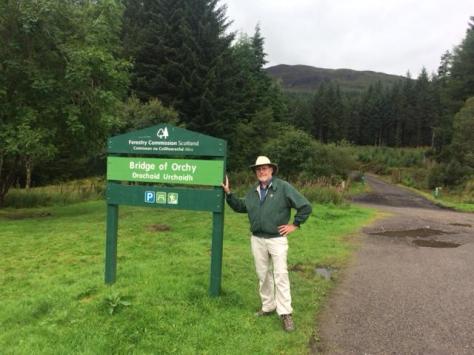
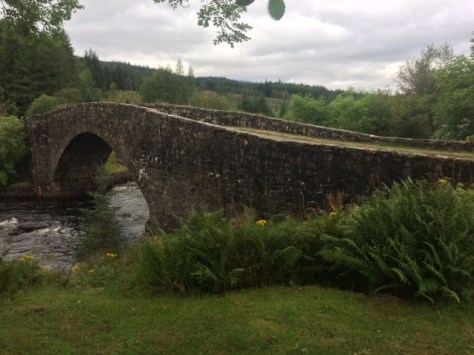


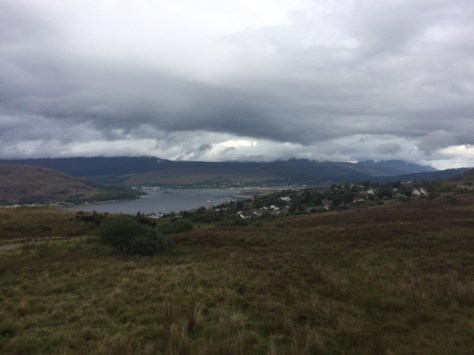

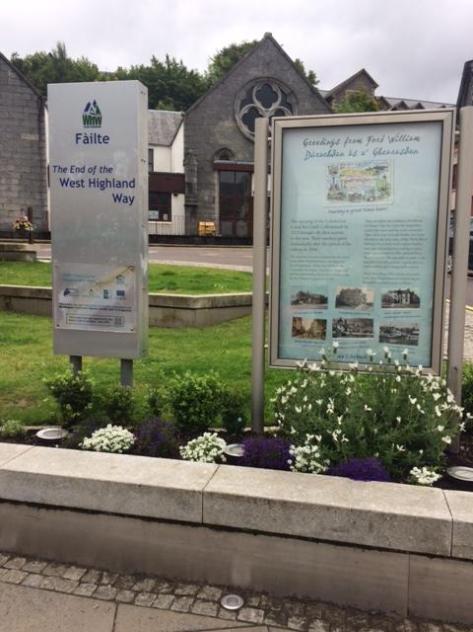
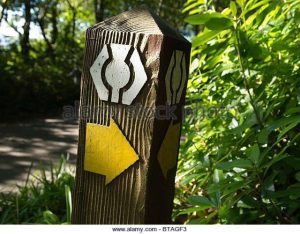
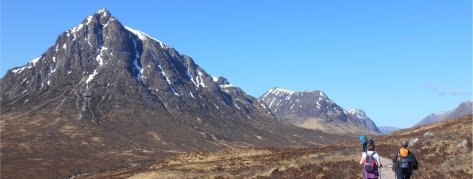 This Way begins in a suburb of Glasgow named Milngavie – but pronounced “Mulgai” – and proceeds 96 miles to the town of Fort William.
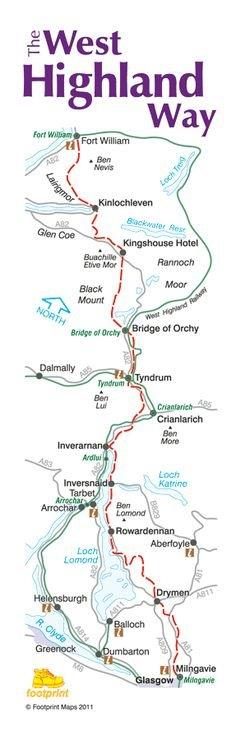 There are campgrounds and sleeping barns along the route, but no hostels or pilgrim albergues such as are found on the Camino.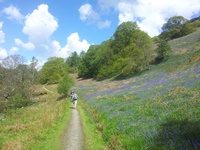
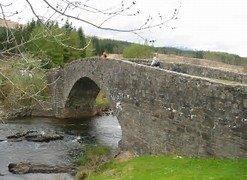

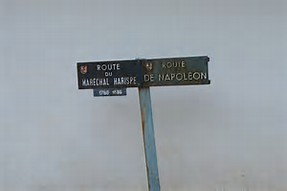
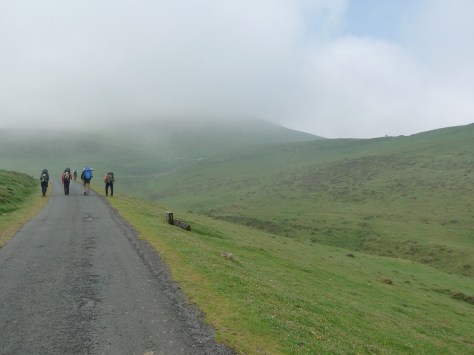

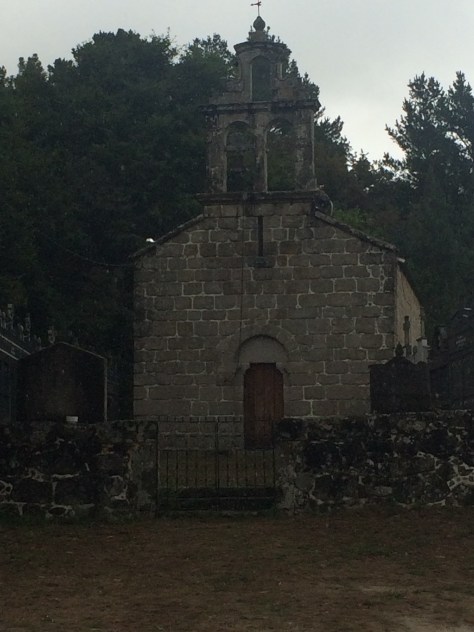
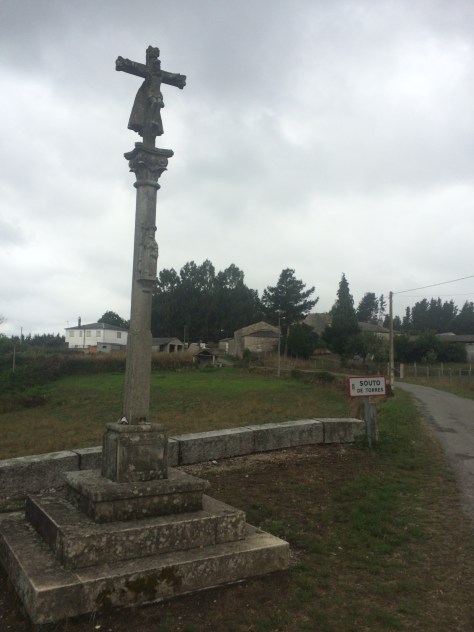

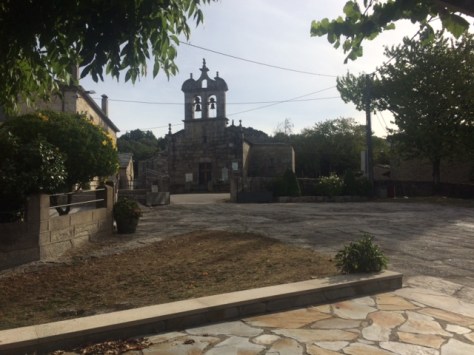
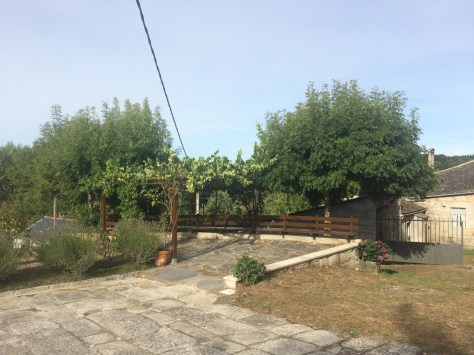
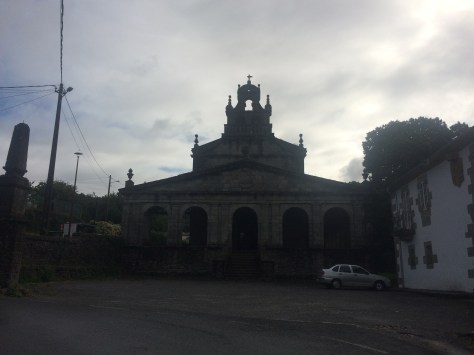
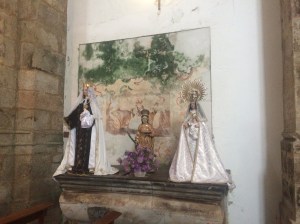
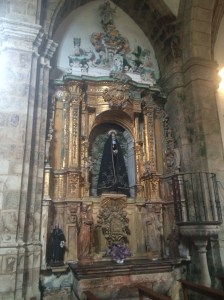
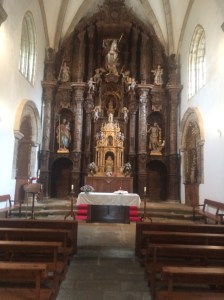
 A manor house next door, Casa Grande de Vilabade, was built in the 17th century by Diego Osorio Escobar, Spain’s viceroy to Mexico. It has been restored and is available for public functions.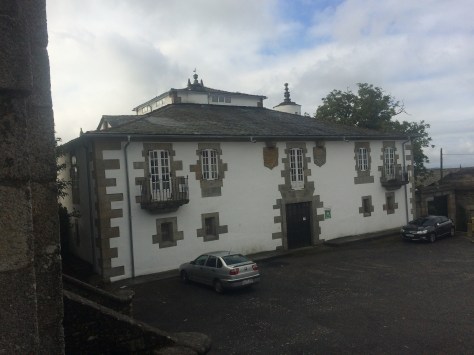
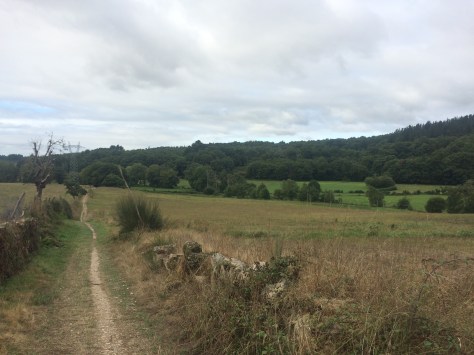
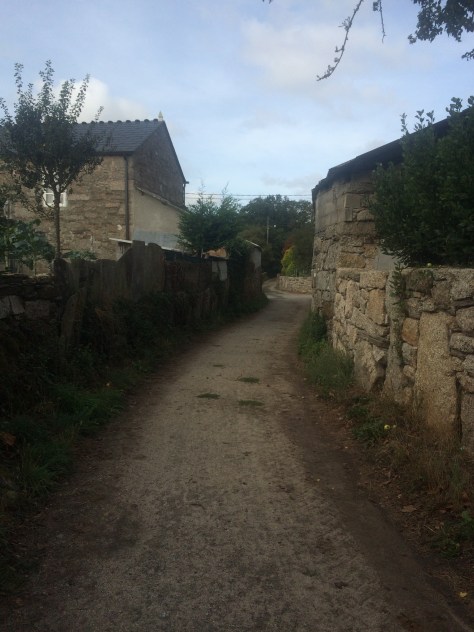 There I discovered a taxi whose driver was heading out for his day. This was pure serendipity. I had feared that I would end up walking all the way to Lugo before finding a taxi. I hailed the taxi and returned to Cadavo. The driver was somewhat incredulous that he had landed a fare in that tiny hamlet.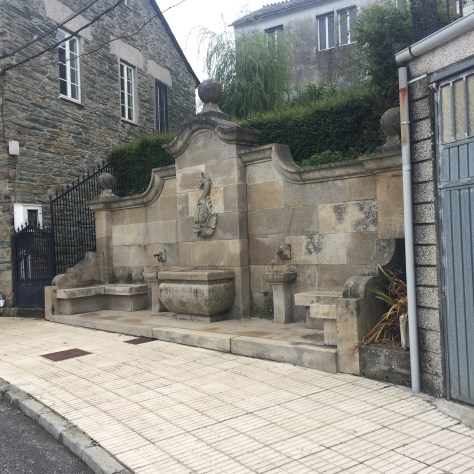
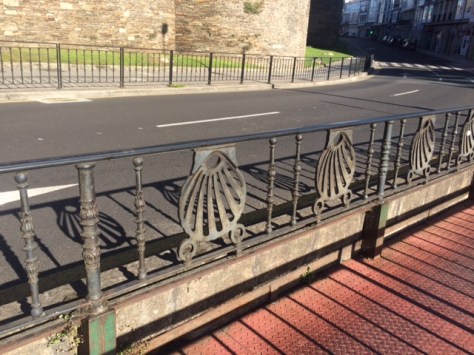
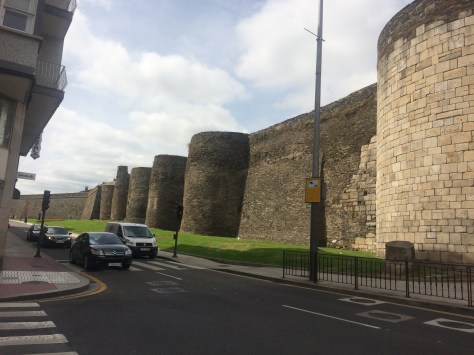
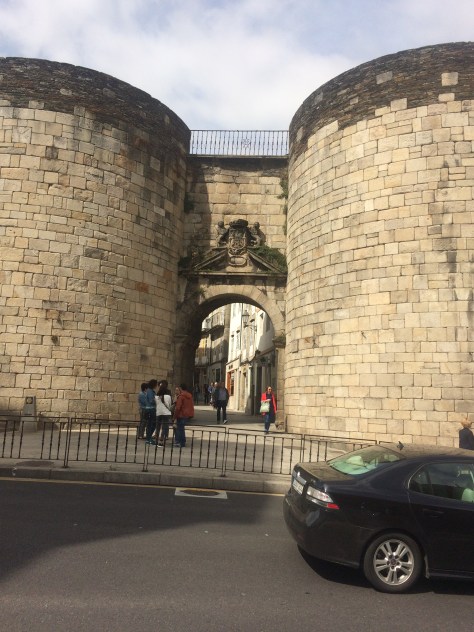

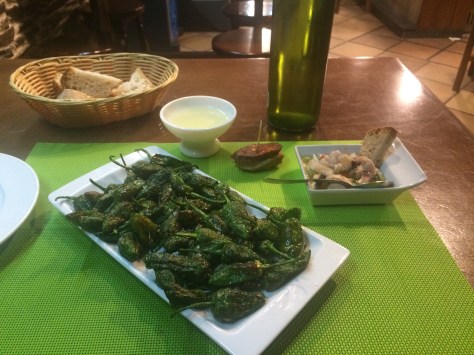 The next morning, I made my way to the Lugo railroad station and bought my ticket to Madrid. My reservation was for the next day, but I was there in time to observe a train departing Lugo en route to Madrid. (The video that follows is over two minutes in length. You may wish to skip it unless you are a dyed in the wool rail fan.)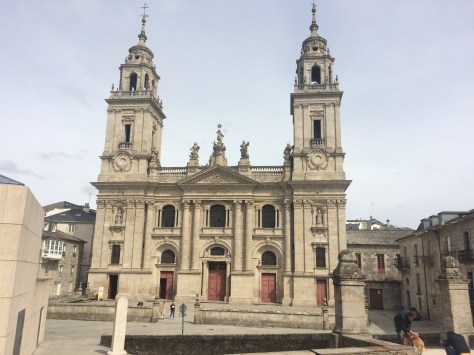

 If you wish to be notified when I post again, click on the button on the lower right of your screen. This may not be available on cell phones.
 fogcityboy